


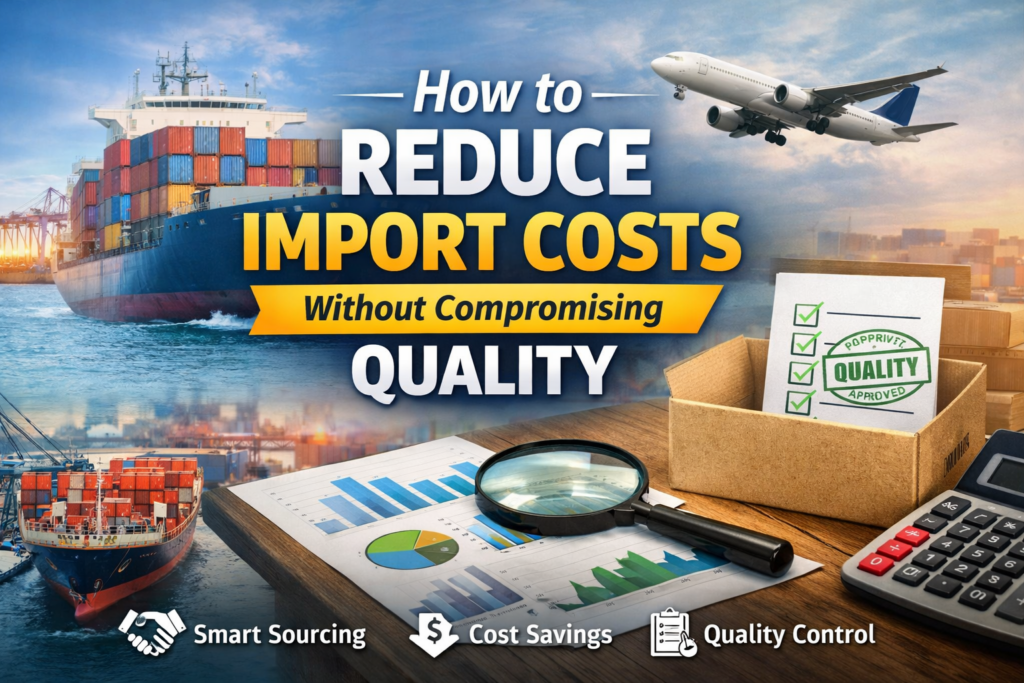
In global trade, every buyer is chasing the same goal: lower costs and higher margins. But there’s a common mistake many importers make they assume reducing costs means sacrificing quality.
That assumption leads to delayed shipments, defective products, unhappy customers, and ultimately, financial loss.
The reality is this: you can reduce import costs without compromising quality but only if you approach sourcing strategically, not just tactically.
At chitsglobaltrade, we’ve worked with buyers across industries who initially focused only on price. Over time, they discovered that smart cost reduction is not about choosing the cheapest supplier it’s about building an efficient, controlled, and optimized supply chain.
This guide will walk you through proven strategies to achieve exactly that.
Understanding the Real Cost of Importing
Before you try to cut costs, you need to understand what actually makes up your total import expense.
Many importers focus only on the product price, but that’s just one part of the equation.
Your total landed cost includes:
- Product cost
- Shipping and freight charges
- Customs duties and taxes
- Packaging and handling
- Quality control and inspection
- Delays and damage risks
Focusing only on unit price often leads to higher hidden costs later. reduce import costs without compromising quality
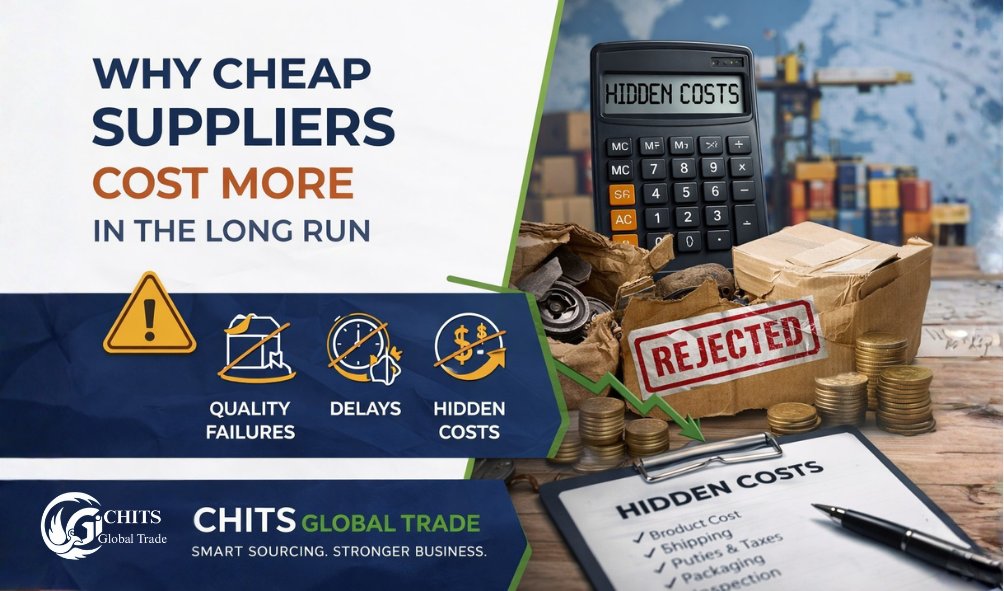
For example, a supplier offering a lower price might:
- Use inferior materials
- Delay production timelines
- Skip proper quality checks
This results in returns, reorders, and lost revenue wiping out any initial savings.
1. Choose Value Over Price
One of the most important mindset shifts is moving from price-based sourcing to value-based sourcing.
The cheapest supplier is rarely the most cost-effective.
Instead, evaluate suppliers based on:
- Consistency in quality
- Production capability
- Communication efficiency
- Reliability in timelines
A slightly higher-priced supplier who delivers consistent quality can significantly reduce:
- Defect rates
- Returns
- Operational stress
At chitsglobaltrade, we often advise clients to calculate the true cost per usable product, not just the purchase price.
2. Optimize Supplier Selection
Supplier selection is where most cost-saving opportunities begin.
Rather than relying on a single supplier, smart importers:
- Compare multiple vendors
- Request samples before bulk orders
- Evaluate long-term scalability
Building relationships with the right suppliers allows you to:
- Negotiate better pricing
- Improve payment terms
- Gain priority in production
A reliable supplier is not just a vendor they are a long-term cost partner.
3. Negotiate Beyond Price
Most buyers make one critical mistake: they negotiate only on price.
But effective negotiation goes beyond that.
You can reduce import costs by negotiating:
- Better payment terms (e.g., partial advance, balance after shipment)
- Flexible minimum order quantities (MOQ)
- Improved packaging efficiency
- Free or discounted tooling and sampling
For example, adjusting packaging dimensions can reduce shipping volume leading to significant freight savings.
At chitsglobaltrade, we help clients structure negotiations in a way that benefits both buyer and supplier, ensuring long-term sustainability.
4. Optimize MOQ Instead of Forcing It Down
Many importers try to force suppliers into lower MOQ (Minimum Order Quantity). This often backfires.
Suppliers increase unit prices to compensate for smaller orders.
Instead, smarter strategies include: reduce import costs without compromising quality
- Combining multiple SKUs in one order
- Planning staggered production
- Building long-term purchase commitments
This approach allows you to maintain competitive pricing without overstocking inventory.
5. Improve Logistics Planning
Shipping is one of the biggest cost components in importing.
Poor logistics decisions can significantly increase expenses.
To optimize logistics:
- Choose the right shipping mode (air vs sea)
- Consolidate shipments whenever possible
- Plan orders in advance to avoid urgent air freight
- Work with reliable freight partners
For example, air freight is faster but expensive, while sea freight is cost-effective for bulk shipments.
Proper planning ensures you don’t pay a premium for last-minute decisions.
6. Focus on Quality Control Early
Many importers treat quality control as an afterthought which is a costly mistake.
Fixing problems after shipment is far more expensive than preventing them during production.
Implement:
- Pre-production inspections
- In-line quality checks
- Pre-shipment inspections
This ensures that defects are identified early, reducing:
- Returns
- Replacements
- Brand damage
At chitsglobaltrade, quality control is integrated into the sourcing process, not added at the end.
7. Reduce Packaging and Material Waste
Packaging is often overlooked, yet it directly impacts both product cost and shipping expenses.
Optimizing packaging can:
- Reduce material costs
- Lower shipping volume
- Improve handling efficiency
Simple changes like:
- Using lighter materials
- Reducing excess layers
- Standardizing box sizes
can lead to significant savings over time.
8. Leverage Long-Term Supplier Relationships
Short-term buying leads to unstable pricing. reduce import costs without compromising quality
Long-term relationships, on the other hand, unlock:
- Better pricing agreements
- Priority production slots
- Improved credit terms
Suppliers are more willing to offer discounts and flexibility when they see consistent business.
This is one of the most effective ways to reduce import costs without compromising quality over time.
9. Plan Orders Strategically
Last-minute orders are expensive.
They often lead to:
- Higher production costs
- Expedited shipping charges
- Increased error rates
Instead, plan your procurement cycle:
- Forecast demand accurately
- Place orders in advance
- Align production schedules with sales cycles
Strategic planning reduces urgency — and urgency is expensive.
10. Work With Sourcing Experts
Managing suppliers, logistics, and quality control independently can be overwhelming.
Mistakes in any of these areas can increase costs significantly. reduce import costs without compromising quality
Working with experienced sourcing partners like chitsglobaltrade helps you:
- Identify reliable suppliers
- Negotiate better deals
- Monitor production quality
- Optimize logistics
This reduces risk while improving efficiency.
Common Mistakes to Avoid
Even experienced importers fall into these traps:
- Choosing suppliers based only on price
- Skipping inspections to save money
- Ignoring hidden costs
- Poor communication with suppliers
- Lack of long-term planning
Avoiding these mistakes is just as important as applying the right strategies.
The Balance Between Cost and Quality
Cost and quality are not opposites they are interconnected.
Low quality increases long-term costs.
High quality, when managed correctly, improves profitability.
The goal is not to find the cheapest option, but the most efficient and reliable one.
Businesses that understand this balance gain a competitive advantage in global markets.
Conclusion
Reducing import costs is not about cutting corners it’s about making smarter decisions at every stage of the supply chain.
From supplier selection to logistics planning and quality control, every step offers an opportunity for optimization.
When done correctly, you can reduce import costs without compromising quality, improve margins, and build a more resilient business.
At chitsglobaltrade, we specialize in helping businesses achieve exactly that combining cost efficiency with consistent quality through structured sourcing strategies.
If you’re looking to optimize your importing process and avoid costly mistakes, the right approach makes all the difference.
Here are SEO-optimized FAQs for your blog, naturally incorporating your primary keyword while keeping readability and keyword density balanced
Frequently Asked Questions (FAQs)
1. What is the best way to reduce import costs without compromising quality?
The best way to reduce import costs without compromising quality is to focus on strategic sourcing, reliable supplier selection, and efficient logistics planning rather than choosing the cheapest option.
2. Can I reduce import costs without compromising quality by choosing cheaper suppliers?
Not always. Cheaper suppliers often lead to quality issues, delays, and hidden costs. A better approach is to work with reliable suppliers who offer consistent quality and long-term value.
3. How does supplier negotiation help reduce import costs?
Supplier negotiation can help reduce import costs by improving payment terms, optimizing packaging, and adjusting order quantities instead of just lowering unit prices.
4. What role does MOQ play in reducing import costs?
MOQ (Minimum Order Quantity) affects pricing. Instead of forcing lower MOQ, strategies like bulk planning or mixed orders can help reduce import costs without compromising quality.
5. How can logistics planning reduce import expenses?
Efficient logistics planning—such as choosing the right shipping method and consolidating shipments—can significantly reduce import costs while maintaining product quality.
6. Why is quality control important when trying to reduce import costs?
Quality control prevents defects, returns, and losses. Investing in inspections helps reduce import costs without compromising quality in the long run.
7. What are the common mistakes importers make when trying to cut costs?
Common mistakes include focusing only on price, skipping inspections, choosing unreliable suppliers, and ignoring hidden costs like shipping and delays.
8. How can small businesses reduce import costs without compromising quality?
Small businesses can reduce import costs by planning orders in advance, negotiating smartly, and working with experienced sourcing partners like chitsglobaltrade.
9. Does long-term supplier relationship help in cost reduction?
Yes, long-term relationships lead to better pricing, priority production, and flexible terms, helping reduce import costs without compromising quality.
10. Should I work with a sourcing company to reduce import costs?
Working with a sourcing company like chitsglobaltrade can help identify reliable suppliers, manage quality, and optimize logistics, ultimately reducing overall import costs.