


Table of Contents
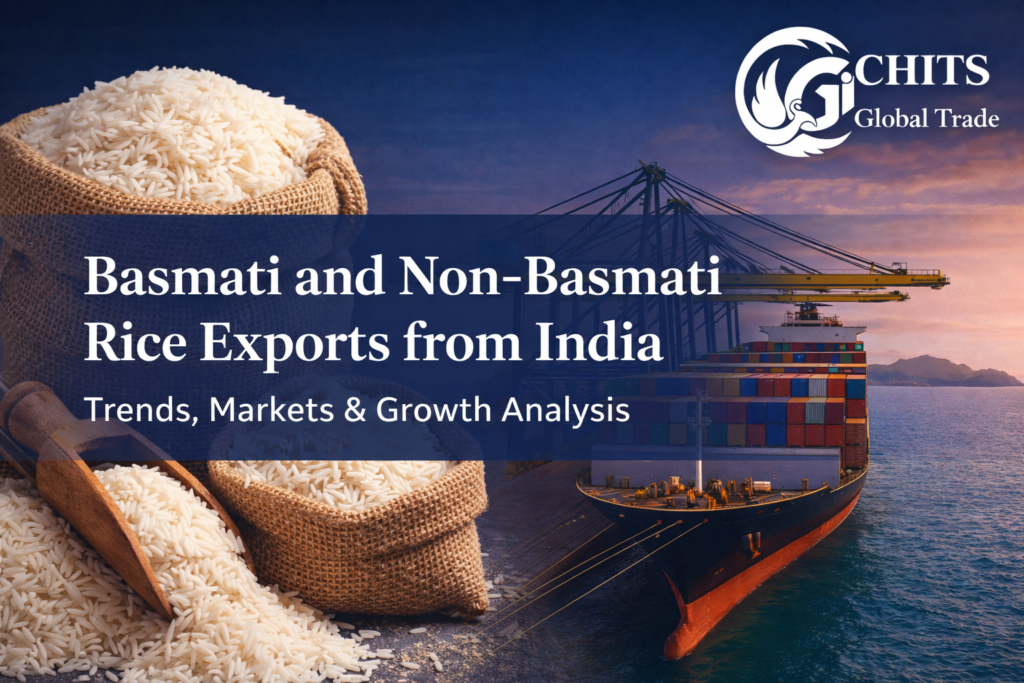
Basmati vs Non Basmati Rice Exports from India: India is the world’s largest rice exporter, supplying both premium Basmati rice and high-volume non-Basmati varieties to more than 150 countries. Rice exports are a cornerstone of India’s agricultural trade, contributing billions of dollars in foreign exchange and supporting millions of farmers across multiple states.
However, while India dominates global rice exports in volume, the structure, value dynamics, policy risks, and competitive pressures differ significantly between Basmati and non-Basmati segments. Understanding these differences is essential for exporters, importers, and policy analysts.
Basmati vs Non Basmati Rice Exports from India
Overview of India’s Rice Export Industry
Rice is one of India’s most widely cultivated crops, grown across diverse agro-climatic zones. The country exports two major categories:
- Basmati Rice – Premium, long-grain aromatic rice
- Non-Basmati Rice – Includes white rice, parboiled rice, broken rice, and specialty varieties
Together, these segments position India as a global rice trade leader. Yet, their markets, price structures, and risks are distinct.
Basmati Rice Exports from India | Basmati vs Non Basmati Rice Exports from India
What Makes Basmati Unique?
Basmati rice is known for:
- Extra-long grain length
- Distinct aroma
- Soft texture after cooking
- Elongation upon cooking
Geographically, authentic Basmati is cultivated primarily in northern India, particularly in:
- Punjab
- Haryana
- Western Uttar Pradesh
- Parts of Uttarakhand
Its geographical identity contributes to brand value and export premium.
Major Importing Countries for Basmati Rice
India exports Basmati primarily to:
- Middle Eastern countries (Saudi Arabia, UAE, Iran)
- European Union nations
- United States
- Canada
The Middle East remains the largest market due to strong cultural and culinary preference for aromatic rice.
Economic Value of Basmati Exports
Basmati rice generates significantly higher per-ton export value compared to non-Basmati varieties. It is a high-margin segment driven by:
- Branding
- Packaging
- Quality grading
- Aging processes
Exporters often invest in polishing, grading, and retail packaging to increase value.
However, the Basmati market is sensitive to geopolitical tensions and trade restrictions. For example, payment issues or sanctions affecting major buyers can disrupt trade flows.
Challenges in Basmati Exports
- Price volatility due to limited cultivation regions
- Competition from Pakistan (a key Basmati exporter)
- Quality compliance requirements in EU and US markets
- Residue testing and strict phytosanitary regulations
To sustain premium positioning, consistent quality control is non-negotiable.
Non Basmati Rice Exports from India | Basmati vs Non Basmati Rice Exports from India
What Is Non-Basmati Rice?
Non-Basmati rice includes a broad range of varieties such as:
- White rice
- Parboiled rice
- Broken rice
- Medium and short grain varieties
Unlike Basmati, non-Basmati rice is grown across multiple states including:
- West Bengal
- Andhra Pradesh
- Telangana
- Chhattisgarh
- Odisha
This wide production base allows high-volume exports.
Major Importing Countries for Non-Basmati Rice
India exports non-Basmati rice primarily to:
- African nations
- Southeast Asia
- Bangladesh
- Nepal
In many African countries, Indian rice plays a crucial role in food security.
Volume Leadership and Competitive Pricing
India’s dominance in non-Basmati exports is driven by:
- Large-scale production
- Competitive pricing
- Government procurement systems
- Established shipping networks
India frequently accounts for a major share of global non-Basmati trade volume.
However, this is largely a commodity-driven segment with thinner margins compared to Basmati.
Policy Sensitivity in Non-Basmati Exports
Unlike Basmati, non-Basmati rice is more vulnerable to government export restrictions.
To stabilize domestic food prices, authorities may:
- Impose export bans
- Set minimum export prices
- Introduce export duties
While these measures protect domestic consumers, they create uncertainty for global buyers and exporters.
This policy volatility is a strategic risk in the non-Basmati segment.
Key Differences Between Basmati and Non-Basmati Exports | Basmati vs Non Basmati Rice Exports from India
| Factor | Basmati Rice | Non-Basmati Rice |
|---|---|---|
| Price per ton | High | Moderate to Low |
| Market Type | Premium | Volume-driven |
| Main Buyers | Middle East, EU, US | Africa, Asia |
| Policy Risk | Moderate | High |
| Branding | Strong | Limited |
| Margin Structure | Higher | Lower |
The two segments operate under different commercial models — one brand-driven, the other volume-driven.
India’s Competitive Position Globally | Basmati vs Non Basmati Rice Exports from India
India competes with:
- Pakistan (in Basmati segment)
- Thailand and Vietnam (in non-Basmati segment)
India’s advantages include:
- Large cultivation area
- Established export logistics
- Price competitiveness
- Strong diaspora demand
However, competitors like Vietnam often compete aggressively on price, and Thailand maintains strong reputation in premium rice markets.
India’s ability to balance affordability with quality consistency determines long-term competitiveness.
Infrastructure and Supply Chain Role | Basmati vs Non Basmati Rice Exports from India
Rice exports depend heavily on:
- Efficient milling facilities
- Port infrastructure
- Container availability
- Cold and dry storage systems
Improvements in logistics and port efficiency have strengthened India’s export capacity. Yet, supply chain bottlenecks during global crises (such as container shortages) expose structural vulnerabilities.
Impact on Farmers and Rural Economy | Basmati vs Non Basmati Rice Exports from India
Rice exports directly affect:
- Farmer incomes
- Rural employment
- Agro-processing industries
- Foreign exchange reserves
Basmati cultivation, in particular, can significantly increase farmer earnings due to premium pricing.
However, overdependence on water-intensive rice farming raises sustainability concerns, especially in water-stressed regions like Punjab.
Export growth must be balanced with environmental considerations.
Sustainability and Future Outlook
Key issues shaping the future of Indian rice exports:
- Climate change impact on yields
- Water scarcity
- Soil degradation
- Shifting global trade policies
To remain competitive, India must:
- Improve water-efficient farming techniques
- Promote sustainable cultivation
- Enhance traceability systems
- Invest in value-added rice products
Additionally, branding and packaged retail exports can increase margins in both segments.
Conclusion
Basmati and non-Basmati rice exports from India represent two distinct but complementary pillars of the country’s agricultural trade.
Basmati offers high margins, brand recognition, and premium positioning. Non-Basmati delivers volume leadership and food security support to developing nations.
India’s global dominance in rice exports is substantial but not immune to policy shifts, climate risks, and competitive pressures.
Long-term leadership will depend on quality assurance, supply chain efficiency, sustainable farming practices, and strategic trade diplomacy.
If managed strategically, India can maintain its position as the world’s leading rice exporter while improving value realization and environmental resilience.
Also Read:
Why Indian Spices Are in High Demand Worldwide