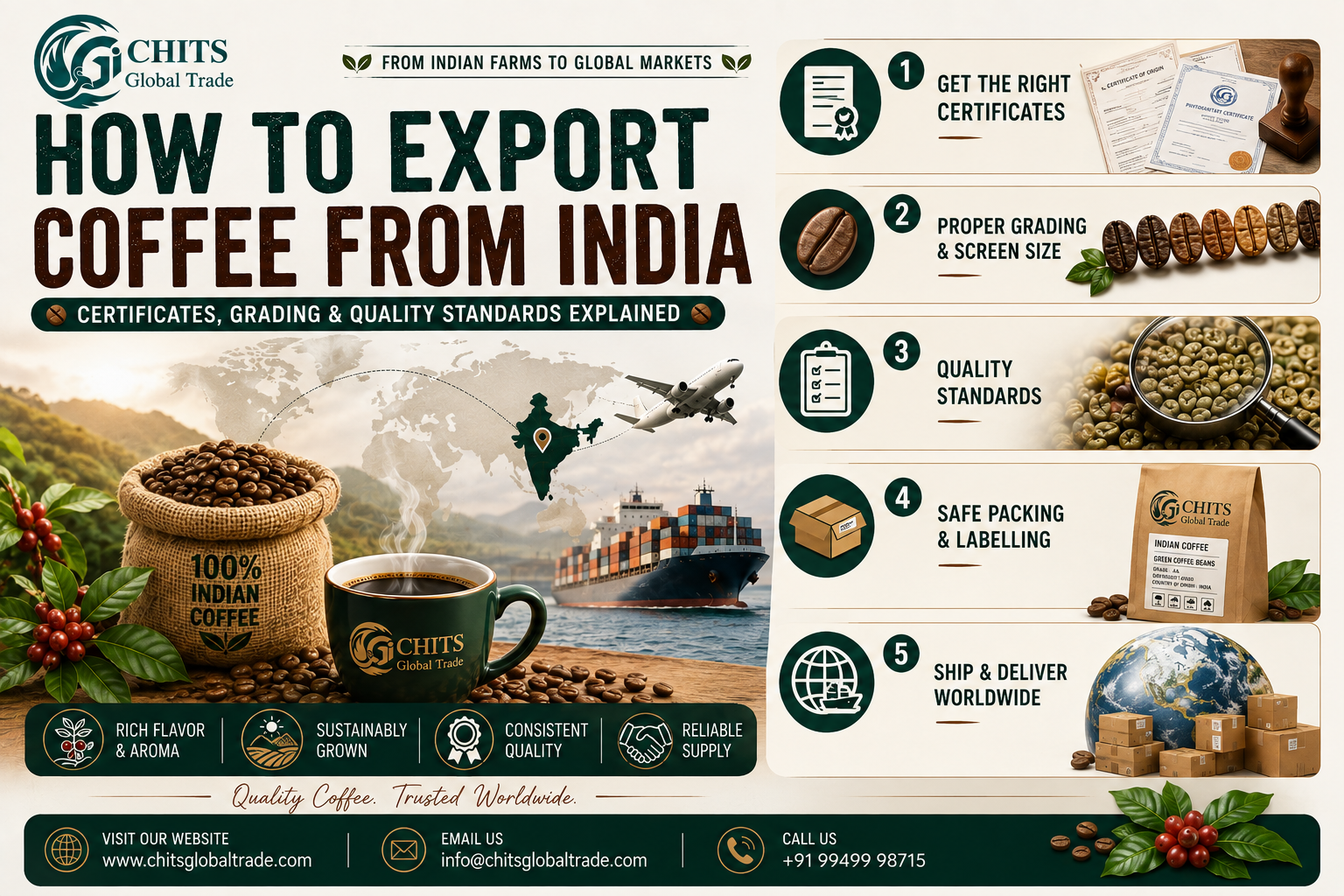



Indian Coffee for Espresso Blends: Discover how US and UK roasters can choose Indian Arabica, Robusta, and Monsooned Malabar green coffee beans for balanced, high-body espresso blends.
Espresso is one of the most demanding coffee styles, so choosing the right green bean matters more than choosing the cheapest one. If you are a US or UK roaster looking for a reliable origin for espresso blends, Indian coffee gives you practical options with body, balance, crema, and consistency.
Indian Arabica, Robusta, and Monsooned Malabar each play a different role in espresso development. The right blend can support café service, wholesale accounts, private-label bags, and milk-based drinks without sacrificing cup quality.
Indian Coffee for Espresso Blends

Indian Coffee for Espresso Blends
Why Indian Coffee Works for Espresso | Indian Coffee for Espresso Blends
Indian coffee is useful for espresso because it offers flexibility. You can build a blend that is smooth and aromatic, strong and crema-rich, or mellow and heavy-bodied depending on your target market.
For US and UK buyers, that flexibility matters because espresso demand is tied to cafés, roasteries, foodservice, and retail shelves. The US specialty coffee market remains strong, and the UK has a large, active coffee-shop culture, both of which create ongoing demand for espresso-friendly green coffee.cbi+1
CHITS Global Trade supplies Indian coffee through a sourcing and export model that supports buyers looking for Arabica, Robusta, and Monsooned Malabar options from India.ncausa
What Makes a Good Espresso Blend
A good espresso blend is not defined by origin alone. It is defined by how the coffee performs in the cup.
A strong espresso blend usually needs:
- Good body.
- Stable crema.
- Controlled acidity.
- Sweetness after development.
- Roast consistency.
- Good performance in milk drinks.
- Reliable supply across multiple shipments.
If you are roasting for cafés or wholesale accounts, the blend must also be repeatable. A coffee that cupps beautifully but behaves inconsistently in extraction may not be suitable for an espresso program.
Indian Arabica for Balance | Indian Coffee for Espresso Blends
Indian Arabica is a useful base for roasters who want a smoother espresso profile. It can bring balance, aroma, and a more refined cup structure.
For many buyers, Arabica is the foundation of an espresso blend because it helps preserve clarity while still allowing room for sweetness and roundness. If you are targeting specialty cafés or premium retail customers, Indian Arabica is often the first coffee to sample.
When sourcing Indian Arabica, ask for:
- Grade.
- Processing method.
- Screen size.
- Moisture range.
- Crop period.
- Sample availability.
- Recommended roast style.
Indian Arabica works especially well when you want a cleaner espresso with moderate intensity and good drinkability.
Indian Robusta for Body and Crema | Indian Coffee for Espresso Blends
Indian Robusta is one of the most practical coffees for espresso blends because it can add strength, body, and crema.
This is especially helpful for:
- Café espresso programs.
- Milk-based drinks.
- Traditional espresso blends.
- Higher-volume commercial accounts.
- Blends that need more structure and punch.
A supplier page from CHITS Global Trade highlights Indian Robusta as strong in body, higher in caffeine, and effective for crema production, which makes it a natural fit for espresso use.coffeeboard
Robusta should not be chosen only because it is cheaper. It should be chosen because it improves the blend in a way your customer can taste.
Where Monsooned Malabar Fits
Monsooned Malabar is a distinctive Indian coffee that works well in specific espresso applications. It is created through monsooning, where selected dry-processed Arabica and Robusta beans are exposed to humid monsoon conditions on India’s west coast.
The Coffee Board of India notes that monsooned coffees are used to mellow and add richness to blends, and it identifies Monsooned Malabar AA as the top grade.
For espresso roasters, Monsooned Malabar can help create:
- Lower perceived acidity.
- A heavier mouthfeel.
- A mellow, rounded profile.
- A blend that works well in milk drinks.
It is not a universal solution, but it can be a strong blending component when the goal is body and softness rather than bright acidity.
Choosing the Right Blend Style | Indian Coffee for Espresso Blends
Different espresso programs need different green coffee choices. A specialty café blend is not the same as a high-volume wholesale blend.
| Espresso goal | Best Indian coffee direction | Expected result |
|---|---|---|
| Smooth specialty espresso | Predominantly Indian Arabica | Balance, aroma, clarity |
| Traditional café espresso | Arabica with Indian Robusta | Body, crema, strength |
| Heavy-bodied blend | Arabica or Robusta with Monsooned Malabar | Soft acidity, roundness, richness |
Use these as starting points, not fixed formulas. Final percentages should be tested in your own roasting and extraction setup.
What US and UK Roasters Should Request
Before asking for a quote, give the supplier a clear buying brief. That helps the exporter suggest the right Indian coffee rather than sending a generic offer.
Include:
- Coffee type.
- Grade.
- Intended use.
- Quantity.
- Destination port.
- Packaging requirement.
- Preferred Incoterm.
- Sample request.
- Target shipment date.
- Roasting style or cup profile.
A strong RFQ may look like this:
We are a US roaster looking for green coffee for an espresso blend. We need strong body, good crema, and balanced flavor for milk-based drinks. Please share suitable Indian Arabica, Robusta, or Monsooned Malabar options, sample availability, and an FOB quotation.
That kind of request makes it much easier for a supplier to respond with something meaningful.
How to Test Before Buying | Indian Coffee for Espresso Blends
Do not build your final espresso blend from a quote alone. Always test the coffee first.
Ask for samples and evaluate:
- Green appearance.
- Roast performance.
- Espresso extraction.
- Crema quality.
- Sweetness.
- Body.
- Acidity.
- Performance in milk.
- Repeatability across multiple roasts.
If the coffee is being considered for a retail product or café program, test it in the same equipment and brewing conditions where it will be used commercially.
Why CHITS Global Trade
CHITS Global Trade is positioned as an India-based export and global sourcing company with coffee already featured on its website. The company’s coffee-related content and export structure support buyers who want sourcing discussions for Indian Arabica, Indian Robusta, and Monsooned Malabar.ncausa+2
That matters for US and UK buyers who want more than a price list. They want a sourcing partner who can discuss product fit, availability, packaging, and export coordination.
Looking for green coffee beans for your espresso blend?
Send CHITS Global Trade your coffee type, preferred grade, quantity, destination port, packaging needs, and Incoterm. We can discuss Indian Arabica, Robusta, and Monsooned Malabar options for your espresso program, subject to availability.chitsglobaltrade
Email: info@chitsglobaltrade.com
Website: chitsglobaltrade.com
Contact page: Contact Us
FAQs of Indian Coffee for Espresso Blends
Is Indian coffee good for espresso blends?
Yes. Indian Arabica, Robusta, and Monsooned Malabar can all work in espresso blends depending on the taste profile you want.
Which Indian coffee is best for crema?
Indian Robusta is commonly used when the goal is more body and crema in espresso.
What is Monsooned Malabar used for?
Monsooned Malabar is often used in blends that need a mellow, heavy-bodied, lower-acid character.
Can I ask for samples before placing an order?
Yes. Samples are important before making a bulk buying decision, especially for espresso programs.
What should I send when requesting a quotation?
Send coffee type, grade, quantity, destination port, packaging requirement, shipment date, and preferred Incoterm.
Does CHITS Global Trade supply coffee for the US and UK?
Yes. CHITS Global Trade positions itself as an export and sourcing partner for buyers in the US and UK and already has Indian coffee content on its website.
Conclusion of Indian Coffee for Espresso Blends
Indian coffee is a smart choice for US and UK roasters who want more than a standard green bean supply. Whether you need balance from Arabica, body and crema from Robusta, or a softer, richer profile from Monsooned Malabar, India offers flexible options for building reliable espresso blends. For the best results, always request samples, check the grade and specifications, and compare quotes based on the full value of the offer, not just price.
If you are looking for a sourcing partner that understands Indian coffee export requirements and buyer expectations, CHITS Global Trade can help you move from enquiry to a serious supply conversation.