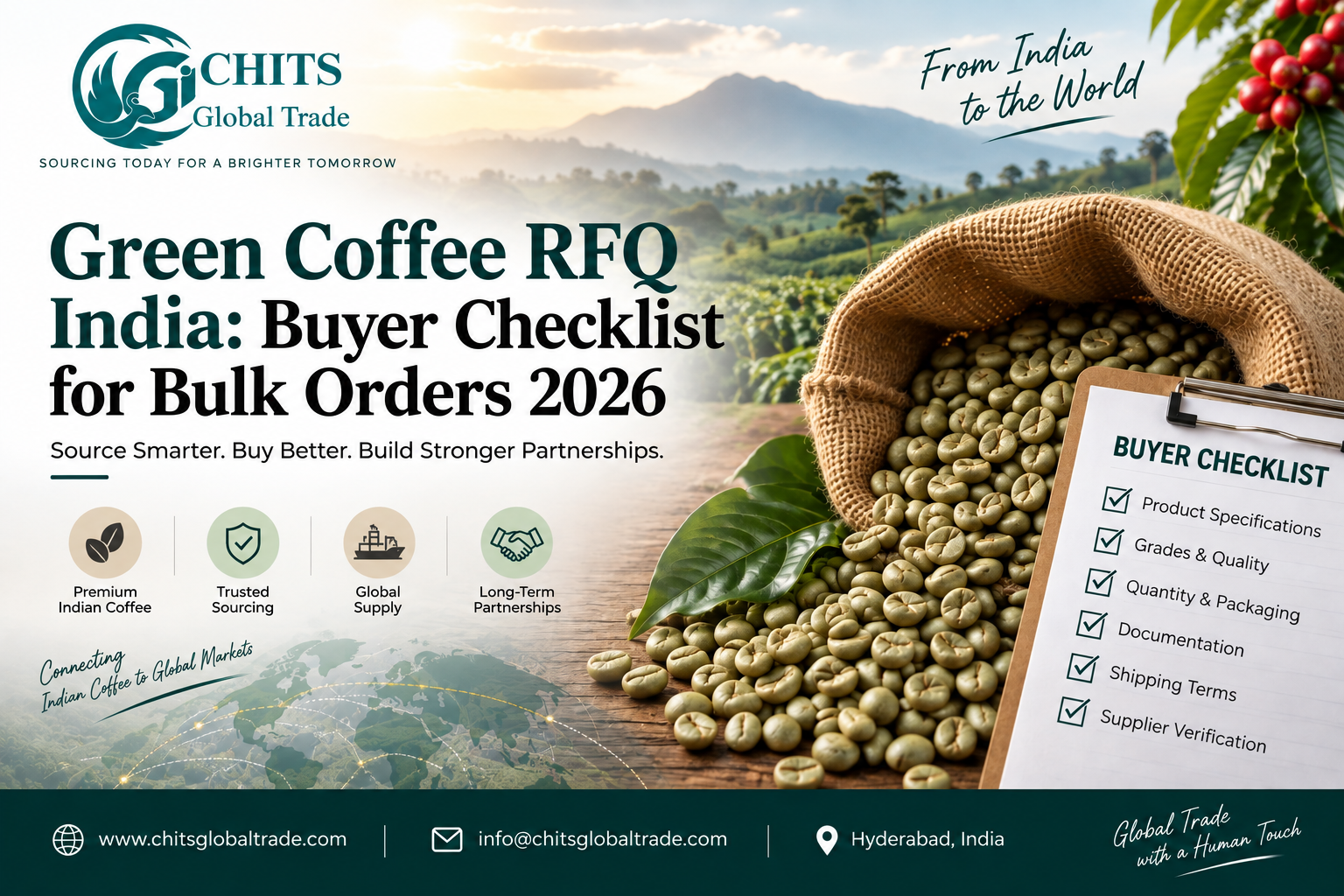



How to Export Coffee from India: Learning how to export coffee from India starts long before a shipment ever reaches a port. For growers, suppliers, and emerging exporters, understanding exactly which certificates are mandatory, how coffee is graded, and what quality standards international buyers expect is the difference between a smooth, profitable shipment and one that gets delayed, downgraded, or rejected entirely at customs.
This guide walks through everything you need to know about how to export coffee from India, covering the essential certificates required, the moisture content standards your beans must meet, how defect and broken bean percentages are calculated, and what buyers in markets like the UK and USA actually expect to see before they’ll commit to a purchase. Whether you’re a first time supplier or an established grower looking to formalize your compliance process, this guide gives you a complete, practical roadmap.
How to Export Coffee from India

How to Export Coffee from India
Why Getting Certificates and Quality Standards Right Matters
Before diving into the specifics of how to export coffee from India, it’s worth understanding why this process is so rigorous. International buyers operate in a competitive, quality sensitive market, and a shipment with incomplete paperwork can be held at customs, delayed for weeks, or rejected outright, costing both the supplier and exporter significant money. Similarly, a shipment with excessive moisture or too many broken beans can develop mold, lose flavour quality, or fail to meet the grade the buyer paid for. Getting this right the first time protects your reputation and builds the kind of trust that leads to long term, repeat contracts rather than one-off sales.
The Essential Certificates You Need to Export Coffee from India
Coffee Board of India Registration
Anyone serious about how to export coffee from India needs to start here. Registering with the Coffee Board of India establishes you as a recognised participant in the formal coffee trade, and it’s typically the very first document exporters and international buyers will ask to verify.
FSSAI Compliance Documentation
The Food Safety and Standards Authority of India requires food exporters to demonstrate that their product is safe for consumption. While the formal FSSAI import license often sits with the buyer or importer in the destination country, Indian suppliers still need accurate labeling, supporting documentation, and reliable lot traceability to satisfy these requirements on the export side.
Phytosanitary Certificate
This is one of the most critical documents in the entire process of how to export coffee from India. Issued by India’s Plant Quarantine authority, it confirms that your coffee beans are free from pests, insects, and plant diseases, and it’s a mandatory requirement for most importing countries, including the UK and USA.
Certificate of Origin
This document verifies that the coffee beans genuinely originate from India, which matters for customs classification and allows buyers to claim preferential duty treatment under applicable trade agreements.
Fumigation Certificate
If your coffee ships in wooden packaging or containers requiring pest control treatment, a fumigation certificate confirming ISPM-15 compliance may be required to prevent pest introduction into the importing country.
Quality and Lab Test Reports
Many buyers, particularly in the specialty segment, request pre-shipment lab test reports covering pesticide residue limits and contaminants like Ochratoxin A, a mold-related toxin that can develop in improperly stored coffee. Having these reports ready in advance significantly speeds up buyer confidence.
Commercial Invoice and Packing List
Every shipment needs a detailed commercial invoice and packing list specifying bag counts, net and gross weights, and lot or batch numbers, ensuring full traceability from farm to final destination.
Moisture Content Standards: The Number You Cannot Get Wrong
Anyone researching how to export coffee from India will quickly learn that moisture content is one of the single most important quality indicators, and it’s completely non-negotiable.
The International Coffee Organization, along with ISO 6669 standards, sets the mandatory moisture range for green coffee export between 10 and 12 percent, with an absolute upper safety limit of 12.5 percent. Coffee beans exceeding 12.5 percent moisture are not permitted for international trade, since excess moisture creates serious risk of mold growth, fermentation, and spoilage during transit and storage.
On the lower end, beans that are too dry, typically below 8 percent moisture, become brittle and prone to cracking or breaking during handling, which increases your defect count and lowers your overall grade.
As a supplier, this means investing in proper drying infrastructure and moisture testing equipment is essential. Beans should be tested at multiple points, after drying, before storage, and again before shipment, to ensure moisture content stays consistently within the target range that international buyers expect.
One notable exception is Monsooned Malabar coffee, which traditionally carries higher moisture content due to its unique monsoon exposure processing method, and is specifically recognised as an exception to standard moisture limits under international coffee trading resolutions.
Grading Explained: Defect Count and Broken Bean Percentage
A core part of understanding how to export coffee from India is knowing how buyers and graders assess quality using a standardized defect counting system, typically based on a 300 to 350 gram sample.
Defects fall into two categories. Primary defects include full black beans, full sour beans, dried cherry, and large foreign matter like stones or sticks, and these are weighted heavily, often counting as one full defect each. Secondary defects include partial black beans, partial sour beans, broken or chipped beans, insect damage, floaters, shells, and small foreign matter, counted on an accumulation basis, meaning several minor defects together equal one full defect.
For broken beans specifically, the standard accepted ratio is five broken beans equal one full defect. This means a small number of broken beans is generally tolerated, but excessive breakage during processing quickly pushes a lot into a lower grade.
Here’s how grading tiers break down based on total full defects per sample:
Specialty Grade coffee allows zero primary defects and a maximum of five full secondary defects, representing the highest quality tier suppliers can achieve.
Premium Grade coffee permits primary defects but caps total full defects at around eight, still representing solid, exportable quality suitable for good commercial blends.
Exchange Grade coffee allows between nine and twenty-three full defects, representing standard commercial quality still fully acceptable for export but priced lower than premium or specialty lots.
Below Standard and Off Grade coffee, with twenty-four or more defects, generally falls outside what most international buyers will accept.
Minimizing broken beans starts at the processing stage. Careful handling during pulping, hulling, and sorting, combined with well maintained equipment, significantly reduces mechanical damage and helps suppliers consistently achieve higher grades.
Screen Size and Bean Uniformity
Beyond defects and moisture, buyers also evaluate bean size uniformity using screen sizes that sort beans by physical dimension. Consistent screen size matters because uneven bean sizes roast unevenly, leading to inconsistent flavour in the final cup. Higher grades typically require a higher percentage of beans above a specific screen size, with strict limits on how much of the lot can fall below the minimum threshold.
Storage and Handling Best Practices
Meeting moisture and defect standards during processing isn’t enough if beans aren’t stored correctly afterward. Coffee should be kept in a cool, dry, well ventilated space away from direct sunlight and strong odours, since green coffee is porous and absorbs surrounding smells easily. Bags should be stacked on pallets rather than directly on the floor to prevent moisture absorption from the ground, and regular moisture testing should continue throughout storage, particularly during humid or monsoon periods, to catch any moisture creep before it becomes a problem.
Building Long Term Trust with Exporters and Buyers
Suppliers who understand how to export coffee from India properly, and who consistently deliver coffee meeting agreed specifications on moisture, defect count, and documentation, position themselves as preferred long term partners rather than one-off sellers. Investing early in proper drying, sorting, and testing infrastructure, and maintaining organized records of Coffee Board registration, phytosanitary compliance, and lab test results, is often what separates suppliers who secure long term contracts from those stuck selling only on the spot market.
Frequently Asked Questions
Q1: What is the first step in learning how to export coffee from India?
The first step is registering with the Coffee Board of India, which establishes your legitimacy as a supplier or exporter and is typically required before pursuing any other certification.
Q2: What is the ideal moisture content for export-ready green coffee beans?
The internationally accepted range is between 10 and 12 percent, with 12.5 percent as the absolute upper limit permitted for trade.
Q3: How many broken beans are acceptable in an export lot?
The standard grading ratio treats five broken beans as equal to one full defect. Specialty grade coffee allows a maximum of five full secondary defects total in a 300 to 350 gram sample.
Q4: What certificates are mandatory when learning how to export coffee from India?
Key documents include Coffee Board of India registration, a phytosanitary certificate from Plant Quarantine authorities, a certificate of origin, supporting FSSAI compliance documentation, and a commercial invoice with detailed packing list.
Q5: Is a fumigation certificate always required?
It’s typically required only when wooden packaging materials are used in the shipment, to confirm ISPM-15 compliance and pest-free status of the packaging.
Q6: What happens if moisture content exceeds the accepted limit?
Beans exceeding 12.5 percent moisture are not permitted for international trade, as they carry a significantly higher risk of mold growth, fermentation, and quality degradation during shipping and storage.
Q7: Does Monsooned Malabar coffee follow the same moisture standards?
No, Monsooned Malabar is specifically recognised as an exception under international coffee trading resolutions due to its unique monsoon exposure processing, which naturally results in higher moisture content than standard green coffee.
Q8: What lab tests do international buyers commonly request?
Buyers frequently request pesticide residue testing and Ochratoxin A contamination testing, particularly for shipments headed to strict regulatory markets like the UK and EU.
Conclusion
Mastering how to export coffee from India means understanding certificates, grading, and quality standards as an interconnected system rather than isolated requirements. Getting your Coffee Board registration, phytosanitary certification, and supporting documentation in order, while consistently meeting moisture content targets between 10 and 12 percent and keeping defect and broken bean counts within accepted grading thresholds, positions you as a reliable partner that exporters and international buyers want to work with long term.
If you’re a supplier or grower ready to formalize your export compliance process, reach out to us today. We can guide you through certification requirements, quality benchmarks, and connect you with buyers actively looking for well documented, properly graded Indian coffee.