

Table of Contents
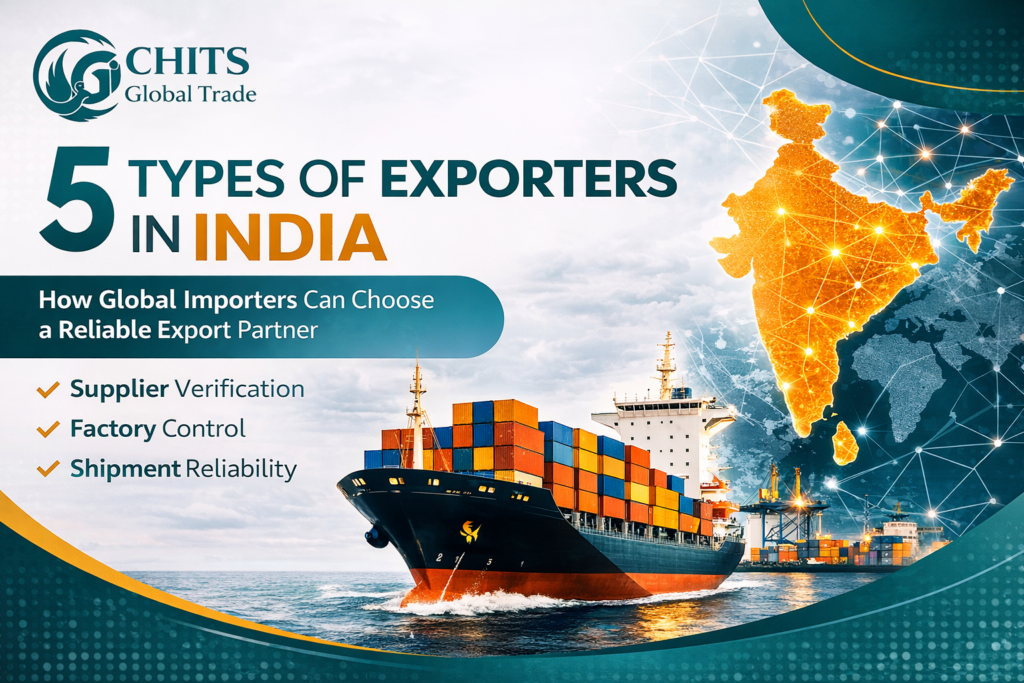
5 Types of Exporters in India: India has become one of the world’s fastest growing manufacturing and export hubs, supplying products to buyers across Europe, the United States, the Middle East, and Southeast Asia.
From textiles and food products to industrial goods and consumer products, thousands of businesses rely on sourcing from India to strengthen their global supply chains.
However, one of the biggest challenges international buyers face is choosing the right exporter or sourcing partner.
Not all exporters operate with the same level of professionalism, systems, or reliability. Understanding the different types of exporters can help importers avoid costly mistakes and build strong long-term partnerships.
Based on common industry patterns, exporters typically fall into five categories.
5 Types of Exporters in India
5 Types of Exporters in India
1. The Price Dumper
Price Dumpers attract buyers with extremely low quotations that appear too good to be true.
While the price may initially look attractive, this approach often results in problems later.
Common characteristics
• Unrealistically low pricing
• Compromised product quality
• Hidden costs during production
• Shipment delays or incomplete orders
Price Dumpers often win orders quickly but struggle to maintain consistent quality standards and delivery commitments.
For international buyers, this can lead to supply chain disruptions and unexpected financial losses.
2. The Middleman
Middlemen do not directly control manufacturing facilities. Instead, they act as intermediaries between the buyer and multiple factories.
While this model can work in certain situations, it introduces additional risks.
Common issues with middlemen
• Limited control over manufacturing processes
• Communication gaps between factory and buyer
• Inconsistent product quality
• Lack of accountability during production problems
When issues arise, buyers often struggle to determine who is responsible for resolving them.
3. The Fake Capacity Seller
Some exporters claim to own factories or large production facilities but actually outsource manufacturing to third-party vendors.
This creates major risks for international buyers.
Warning signs
• Claims of large production capacity without proof
• No factory visit or verification allowed
• Inconsistent product quality between orders
• Difficulty tracking production progress
Without factory verification, buyers cannot be sure where or how their products are being manufactured.
4. The Slow Communicator
Communication is critical in international trade. Yet many exporters struggle to maintain timely and transparent communication with buyers.
Typical problems
• Delayed responses to emails or messages
• Lack of production updates
• Poor documentation management
• Unclear shipment timelines
In global sourcing, slow communication can create serious operational challenges, especially when shipments are time-sensitive.
5. The System Exporter
System Exporters operate with structured processes designed for long-term international trade relationships.
They focus on building trust through reliability, transparency, and operational efficiency.
Key characteristics
• Strong quality control systems
• Compliance with international standards
• Verified manufacturing facilities
• Consistent shipment schedules
• Transparent and responsive communication
System Exporters invest in building sustainable partnerships rather than short-term transactions.
For global buyers, this type of exporter offers the highest level of reliability and scalability.
Why Choosing the Right Exporter Matters | 5 Types of Exporters in India
Selecting the wrong exporter can result in:
• Quality issues
• Shipment delays
• Financial losses
• Supply chain disruptions
• Damage to brand reputation
On the other hand, working with a reliable export partner can help businesses:
• Maintain consistent product quality
• Scale their supply chains
• Reduce operational risks
• Build long-term sourcing partnerships
For international importers, supplier verification and exporter evaluation are essential steps in the sourcing process.
How to Evaluate an Exporter in India | 5 Types of Exporters in India
Before partnering with an exporter, buyers should evaluate several key factors:
1. Factory Verification
Confirm the manufacturing facility and production capacity.
2. Quality Control Systems
Check whether the exporter follows structured QC procedures.
3. Compliance Certifications
Look for international certifications relevant to the product category.
4. Communication Transparency
Reliable exporters maintain clear and timely communication.
5. Shipment Reliability
Review previous shipment performance and logistics processes.
Using a structured exporter evaluation checklist can help buyers make informed decisions.
Frequently Asked Questions (FAQs) | 5 Types of Exporters in India
1. How can importers verify exporters in India?
Importers can verify exporters by conducting factory audits, checking certifications, reviewing trade records, and working with trusted sourcing partners.
2. Is sourcing from India reliable for international buyers?
Yes. India is one of the largest manufacturing hubs globally. However, success depends on choosing verified and reliable exporters.
3. What industries export the most products from India?
Major export sectors include textiles, food products, engineering goods, chemicals, pharmaceuticals, and consumer products.
4. Why do some exporters offer extremely low prices?
Low prices can sometimes indicate compromised quality, hidden costs, or lack of operational systems.
5. What makes a reliable export partner?
Reliable exporters maintain strong quality control systems, transparent communication, verified factories, and consistent shipment performance.
Conclusion | 5 Types of Exporters in India
India offers enormous opportunities for global businesses looking to expand their sourcing networks. However, choosing the right exporter is essential for building a stable and scalable supply chain.
By understanding the different types of exporters and applying proper supplier verification processes, international buyers can significantly reduce risks and build long-term trade partnerships.
If you are looking for a reliable export partner from India, working with a structured and transparent exporter can make a significant difference.
CHITS Global Trade focuses on building long-term international partnerships through verified sourcing, quality control, and reliable shipment processes.
For businesses exploring sourcing from India, a structured exporter evaluation process is the first step toward successful global trade.
Also Read:
How to Verify an Indian Exporter